
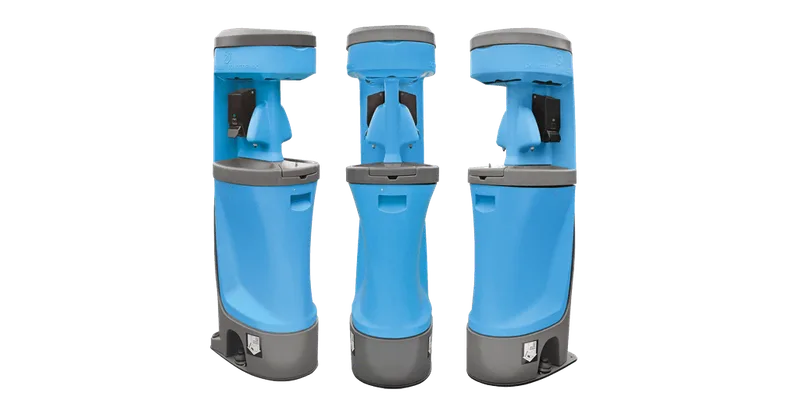
No usable water: distinguish a supply problem from a model assumption
A portable wash station provides a basin and a way to wash with water and soap, but the water arrangement depends on the model. Ask whether the offered equipment stores clean water or needs an agreed connection, and how the user operates it. A nearby tap does not establish a suitable supply, connection or permission to use it.
If the expected water is unavailable, give the provider the station location and describe what the user actually observes. Do not diagnose a pump fault, add an improvised hose or refill it with an unapproved source. The provider can identify the relevant operating instruction or service response; the property contact can resolve an agreed supply that the site was responsible for making available.
Water works, but soap or drying supplies are missing
Water alone does not complete the requested washing provision. Confirm the soap and drying materials intended for the actual station, who supplies them and whether a site contact may replenish them under the agreed instructions. A sanitizer dispenser or a toilet cabin is not a replacement for a required water-and-soap wash point.
For an event or crew, explain where and when repeated use occurs so the supply arrangement matches the users. Assign a check that can identify the missing item, not merely report that the station looks clean. Ask how an exhausted supply should be reported and what authorised replenishment is possible; do not infer unlimited consumables or a guaranteed response time.
The station cannot accept used water
A usable station also needs its specified used-water arrangement. Confirm whether the model collects water within the equipment and who handles its removal. A clean-water refill does not resolve a used-water problem, so report the observed condition rather than repeatedly adding water or assuming the station is ready.
Follow the provider’s instructions about use while the issue is assessed. Do not empty a container into a garden or drain, open components or attempt repairs. The rental’s cleaning and used-water care must be agreed separately from the organiser’s ordinary checks. Food preparation, drinking water or other specialised sink uses should be requested separately, not added to a handwashing order by assumption.
The equipment works, but people cannot reach or operate it
A blocked approach or unsuitable controls is a lost washing function for the affected person, even when water and supplies are present. Identify who cannot use it and whether the obstruction is temporary, such as chairs or stored materials, or part of the proposed arrangement. Review the actual model and accessible approach together rather than assuming that proximity to an accessible toilet is enough.
The site contact may be able to clear an ordinary obstruction within the approved layout. A changed equipment position, different model or alternative washing point needs agreement with the relevant operator and provider. Do not move the station independently. Check that the proposed remedy also leaves provider access for the water, cleaning and used-water tasks it requires.
Order the support that addresses the actual failure
Use those questions before the rental as well as during it. Tell the team which existing washing functions are available, what is missing, the intended users and the period of need. Request the station type, operating arrangement, approved position, delivery and collection together with the named water, soap, drying and used-water responsibilities.
Compare the proposed scope against the specific gap: more stations do not by themselves correct an unavailable supply or an inaccessible position. Have the quotation distinguish included care from additional visits or changed equipment. Keep an authorised contact and removal access until collection, and review the arrangement if use continues longer or moves to another part of the property.
Questions before you book
What should I report when the station cannot be used?
Identify the position and the observed missing function: water, soap or drying supplies, used-water handling, or a usable approach. Follow the agreed instructions rather than diagnosing or repairing the equipment.
Will another wash station solve a supply problem?
Not necessarily. First confirm how the proposed model obtains water and supplies and manages used water. Additional equipment needs its own workable support.
Can our event team refill or empty the station?
Only perform tasks explicitly allowed by the provider’s operating and care arrangement. Reporting a shortage does not authorise a new water source, improvised discharge or equipment work.
Does a portable toilet order cover washing too?
Confirm it separately. A standard toilet cabin provides a different function; the accepted equipment list must identify the washing provision required for the users.