
Establish what the event may actually rely on
Bay City’s Wenonah Park listing describes a downtown amphitheater setting, water and existing porta johns, with event coordination through the City’s special-event process. These details prompt useful questions; they do not prove the equipment’s present operation, sufficient capacity, ownership or permission to connect to water.
Ask the event contact which existing facilities are available during the relevant hours and who is responsible for them. Identify cleaning, tank service, paper and any access restrictions. A venue listing is not an instruction for a new rental provider to service a unit it did not supply.
Describe the added need without duplicating the existing order
Set out the guests and workers present together, the activity duration and any separate areas they occupy. Explain the confirmed contribution of the existing facilities, then identify what remains unresolved. Keep an uncertain access or equipment condition separate from a confirmed shortage.
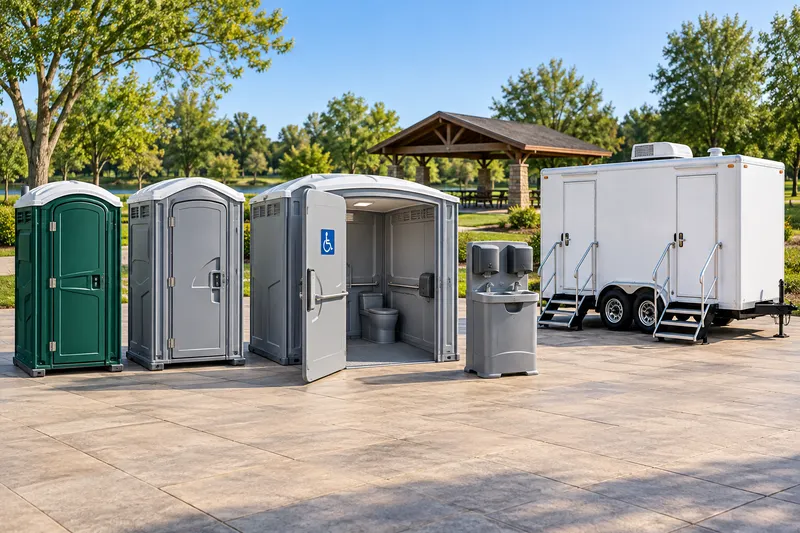
A standard cabin can add a private self-contained toilet function. A suitable accessible model and approach answer access needs, while a washing station adds water, soap, drying and used-water handling where a usable sink is not already available. Guest-oriented upgrades depend on actual model features; the word event does not select a format by itself.
Give the additions their own position and care responsibilities
Coordinate added units with the existing layout so their doors, queues and washing points do not block one another or divert guests through a restricted area. Have the property contact and provider review the accepted standing area, user approach and delivery, service and recovery route for the new equipment.
Specify which supplier cleans, services and replenishes which facilities. Agree how an event contact reports a problem and identifies the affected unit rather than sending an ambiguous request about all toilets on the property. The City listing’s overnight parking, docking and camping restrictions concern those uses; they are not a general statement banning a hired toilet from remaining under an approved arrangement.
Quote and collect the supplementary order explicitly
Ask for the added equipment, rental period, cleaning, tank care, consumables and any washing supplies to be named in the proposal. Include delivery and collection and identify what, if anything, remains the venue’s responsibility. Do not infer included care for existing units from a new order’s service schedule.
Before removal, confirm the added units are no longer required for the remaining guests or workers and that recovery access is available. A change in the venue’s existing facilities may alter the supplementary need, so report it before changing the order. This planning example does not establish current availability or a confirmed service arrangement for Wenonah Park.
Questions before you book
Will the supplier of added toilets service the venue’s existing units?
Only if that is explicitly part of an accepted arrangement. Establish ownership and responsibility rather than assuming the new order covers every unit on site.
Does a water listing mean a washing station can connect there?
No. Confirm permission, compatibility and the actual supply and used-water arrangement for the offered equipment.
What should identify a supplementary order?
State the existing contribution, the additional equipment and users it serves, separate care responsibilities, dates, placement, delivery and collection.